
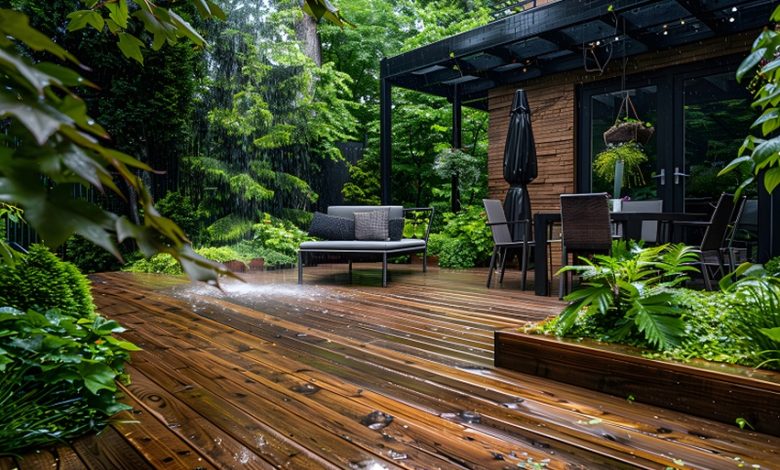
An outdoor deck can create a comfortable area for dining, relaxing or connecting a home with its garden. However, Singapore’s frequent rainfall, high humidity and strong sunlight can place considerable demands on outdoor materials. Timber that performs well in a sheltered setting may require more care when exposed to persistent moisture or direct weather.
Choosing outdoor decking therefore involves more than comparing colours and finishes. Homeowners should consider the exposure of the site, drainage, surface safety, material suitability and the time available for maintenance. Understanding these factors before installation can help you select outdoor timber decking that suits the space and remains practical to care for over time.
Understand the Conditions at Your Site
Start by assessing where the deck will sit and how much weather it will receive. A covered balcony, a partially sheltered patio and an exposed garden platform do not face identical conditions. Roof overhangs may reduce direct rain, while nearby walls, planters and trees can influence airflow and moisture retention.
Observe the area after rainfall. Does water drain away promptly, or do puddles remain near walls and doorways? Are leaves and soil likely to collect beneath the deck? Does the surface receive direct sunlight for most of the day? These details affect both material selection and installation design.
If the deck will cover an existing balcony or waterproofed terrace, check the condition of the underlying surface first. Decking should not conceal unresolved leaks or obstruct drainage outlets. Where the installation may affect a building’s waterproofing, structure or shared areas, obtain appropriate professional advice before proceeding.
Material Performance Matrix
Different decking materials and finishes respond differently to outdoor conditions. The table below provides a framework for comparing timber options, but actual performance depends on the species, product quality, treatment, installation and ongoing care.
| Performance Factor | What to Assess | Questions to Ask |
| Moisture exposure | Resistance to repeated wetting and drying | Is the timber suitable for exposed outdoor use? |
| Dimensional movement | Potential swelling, shrinkage or warping | What spacing and fixing method does the product require? |
| Biological durability | Suitability for the local environment | Does the product require treatment against decay or insects? |
| Surface safety | Grip when wet and the condition of the finish | How does the surface perform in rainy conditions? |
| Sunlight exposure | Colour change, heat and finish deterioration | What weathering should be expected over time? |
| Maintenance | Cleaning, inspection and refinishing needs | Which products and maintenance intervals are recommended? |
| Repairability | Ease of replacing damaged boards | Can individual boards be replaced without major dismantling? |
Use this matrix to compare actual products rather than assuming that all timber behaves in the same way. Ask suppliers to identify the species or product type and provide maintenance instructions relevant to the intended setting.
Prioritise Drainage and Airflow
Moisture management is essential to the performance of outdoor timber decking. Water that remains trapped around boards, supports or the underlying surface can contribute to deterioration and make cleaning more difficult. Poor drainage may also allow dirt and organic debris to accumulate.
The installation should account for how rainwater moves through and away from the deck. Board spacing, subframe design, surface levels and the position of drains all influence performance. The correct arrangement depends on the product and site, so follow the manufacturer’s specifications and the installer’s technical recommendations.
Airflow beneath the deck matters as well. A tightly enclosed space can remain damp if it lacks suitable ventilation. Ask how the design will allow the underside to dry and how the area can be inspected after installation.
Do not rely on gaps between boards alone to solve a drainage problem. The underlying surface still needs to direct water towards appropriate outlets. If the site has persistent ponding, address it before covering the area.
Consider Slip Resistance and Everyday Comfort
Outdoor surfaces can become slippery when wet, especially if algae, dirt or other deposits build up. Surface texture, maintenance, footwear and exposure all affect how safe a deck feels underfoot. No timber finish should be treated as automatically slip-proof in every condition.
Think about who will use the area. A deck beside a swimming pool, near a garden tap or along a frequently used entrance may need more frequent cleaning than a sheltered sitting area. Families with young children, older residents or people with mobility concerns should pay particular attention to transitions, steps and changes in level.
Ask the supplier how the proposed product performs in the intended environment and how to maintain its surface. Avoid applying a coating simply because it promises greater grip without checking whether it is suitable for the timber and outdoor exposure. An incompatible finish may create other maintenance problems.
Plan for Weathering and Maintenance
Timber exposed to sunlight may change colour over time, and finishes can wear as rain and foot traffic affect the surface. These changes are not always defects, but homeowners should understand what appearance to expect and how to maintain it.
Ask whether the timber should be sealed, oiled or treated, and follow product-specific instructions. Using the wrong cleaner or coating may affect the surface or interfere with later maintenance. Inspect boards periodically for splinters, loose fixings, unusual movement, cracks or signs of deterioration.
The required maintenance will depend on the species, treatment, exposure and expected appearance. Some owners are comfortable allowing timber to weather naturally, while others prefer to preserve a more consistent colour. Discuss these preferences before selecting the material because they can influence the finish and ongoing cost.
Check the Full Installation Cost
Compare quotations that cover the same scope. The price should make clear which timber product is supplied, how the subframe and fixings are specified, how edges are finished and whether site preparation is included. Ask about any work needed to address drainage, uneven surfaces or existing defects.
Also consider the long-term cost of cleaning, inspections, refinishing and replacing damaged boards. A lower initial quotation may not represent the same material quality or installation details as another proposal. Written specifications help you compare the options more fairly.
Outdoor timber decking can suit a range of gardens, terraces and patios, but Singapore’s humid climate makes drainage, airflow, material suitability and maintenance particularly important. Assess the actual site, compare product specifications and understand the care required before committing to an installation.
Contact Hardscapes to discuss outdoor decking materials and installation considerations for your property’s exposure, drainage and maintenance needs.